Why Motivation Matters for Real Lasting Change

Most people do not struggle because they have never thought about changing. They struggle because thinking about change feels easier than doing the work change requires.
A person can know they want to feel better, look better, save money, earn a raise, lose weight, build strength, improve a skill, or create a calmer life. That awareness matters, but it does not automatically create action. Real change begins when there is a reason strong enough to pull someone out of the passive stage and into movement.
Motivation is the bridge between “I should” and “I’m doing this.”

Knowing you need to change is not the same as changing
There is a quiet trap in simply knowing something needs to change. It can feel productive. It can feel like progress. Saying “I need to get healthier” or “I should save more money” sounds responsible, but it may not lead anywhere.
That is passive change. It lives in thoughts, plans, guilt, and good intentions.
Active change looks different. It involves a choice, then a step, then another step. It might mean walking for 15 minutes after dinner, applying for a new job, studying for a certification, cooking at home more often, or saying no to habits that keep getting in the way.
The difference is not always knowledge. Many people already know what would help. The difference is having a reason that matters enough to act on.
A goal without motivation often stays on the shelf. It becomes something to start next Monday, next month, or when life feels less busy. The problem is that life rarely becomes perfectly convenient. Motivation gives change a reason to interrupt the old pattern.
Your reason gives the work a purpose
Change usually comes with discomfort. Even positive change takes effort. New habits feel awkward. Old patterns feel familiar. Progress can be slow. Some days will not feel inspiring at all.
That is why the reason behind the change matters.
A person who wants to get a raise may be motivated by more financial stability. Someone who wants to exercise may be motivated by having more energy for their family. Someone saving money may picture a car, a home, a trip, or simply less stress when bills come due.
Motivation does not have to sound noble or impressive. It only has to be honest.
Common reasons for change include:
wanting to feel stronger or healthier
wanting to look more confident in clothes
wanting to afford something meaningful
wanting to become better at a skill
wanting to set an example for others
wanting more independence
wanting less stress and more control
wanting to prove to yourself that you can follow through
Some motivations are external, like recognition, appearance, money, or a promotion. Some are internal, like pride, peace, confidence, or self-respect. Both can help. The strongest motivation often connects the outside result to an inner value.
For example, “I want to save $5,000” may work for a while. “I want to save $5,000 so I can stop feeling panicked every time my car needs work” has more emotional weight. It explains why the sacrifice is worth it.
Real motivation turns vague wishes into specific action
“If you want something to change, you have to change something.”
That line is simple, but it cuts through excuses. Different results require different behaviour. Wanting change without changing behaviour is like expecting a different route while driving the same road every day.
Motivation helps make the next step clearer. Instead of saying, “I want to be better with money,” motivation can lead to a specific action, such as:
checking spending once a week
cancelling one unnecessary subscription
setting up an automatic transfer to savings
waiting 24 hours before buying non-essential items
Instead of saying, “I want to get in shape,” the next step might be walking three evenings a week, packing lunch twice a week, or booking time with a qualified fitness or health professional when needed.
The goal matters, but the behaviour creates the result.
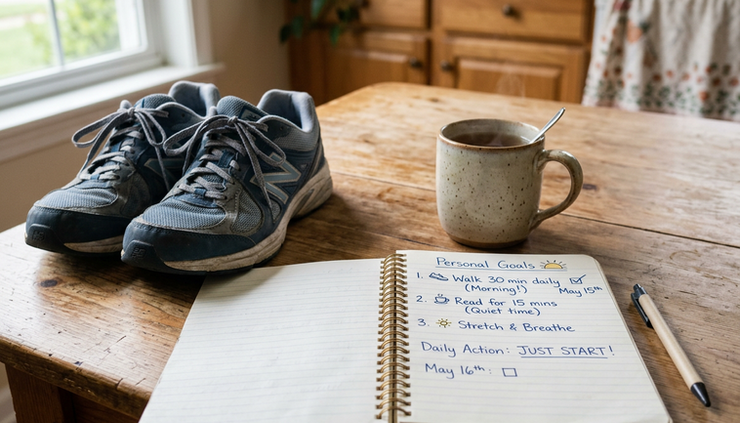
Motivation also helps you maintain change
Starting is one challenge. Maintaining change is another.
At first, motivation can feel strong because the goal is fresh. A new plan brings energy. Progress feels exciting. Then normal life returns. The weather is bad. Work is tiring. Results slow down. Old habits become tempting again.
This is where deeper motivation matters.
Surface motivation may get someone started, but meaningful motivation helps them continue. If the reason is only “I should,” it may not survive stress. If the reason is “I want to feel proud of how I care for myself,” it has a stronger foundation.
Still, motivation alone will not carry every day. Lasting change also needs structure. That might include reminders, routines, support, tracking, and making the desired behaviour easier to do.
A few helpful questions can strengthen motivation over time:
What will improve if I keep going?
What will stay the same if I stop?
Who benefits when I make this change?
What small win can I notice today?
What kind of person am I becoming through this choice?
These questions bring the reason back into focus when willpower gets tired.
Change becomes easier when the reason feels personal
People often borrow goals from others. They think they should want the same body, career, lifestyle, or routine someone else has. That kind of motivation rarely lasts because it is not truly personal.
A better question is, “Why do I want this?”
The first answer may be simple. “I want to lose weight.” “I want to make more money.” “I want to get better at my job.” Keep asking why until the answer feels real.
Maybe losing weight is about confidence, comfort, health, or being able to move with less strain. Maybe making more money is about options, security, or supporting loved ones. Maybe improving at work is about pride, opportunity, or no longer feeling stuck.
When the reason is personal, the change has roots.
That does not mean every day will feel easy. It means the hard days have more context. The early mornings, the skipped purchases, the practice sessions, the healthier meals, the difficult conversations, and the repeated effort all point toward something that matters.
Small actions prove the change is real
Motivation becomes stronger when it is paired with proof. Each small action sends a message: “I am someone who follows through.”
That proof does not need to be dramatic. In fact, dramatic changes can be harder to maintain. A small action repeated often can change identity faster than a huge push followed by burnout.
Start with one change that is clear enough to measure. For example:
walk for 10 minutes after lunch
save $25 every paycheque
practise a skill for 20 minutes three times a week
prepare breakfast at home on weekdays
read one chapter before scrolling at night
The goal is not perfection. The goal is consistency. Missing once does not ruin the change. Quitting is what stops it. A useful mindset is to return quickly, without turning one off day into a lost week.
Motivation gives the reason. Action builds the evidence. Repetition makes the change feel normal.
Lasting change starts with an honest reason
Real change does not begin with a perfect plan. It begins with a reason strong enough to make the work worth doing.
Wanting something is a start. Needing something to change is a signal. But the shift happens when motivation becomes clear and behaviour follows. If the goal is to look better, feel better, buy something meaningful, earn more, improve a skill, lose weight, or build a better daily life, the same truth applies.
If you want something to change, you have to change something.
Pick one reason. Make it specific. Choose one small action that supports it. Then repeat that action long enough for the change to become part of who you are becoming.


Comments